How Often Should Commercial Properties Undergo Structural Tree Inspections
When you manage or own a commercial property, the trees on your land are more than just landscaping features. They are living, growing organisms that can shift from healthy assets to serious liabilities without much visible warning. A mature oak shading your parking lot or a row of ornamental trees lining your building's entrance may look perfectly fine from the outside while quietly developing structural weaknesses underground or within their canopy. This is exactly why structural tree inspections are not optional for commercial property owners - they are a critical part of responsible property management. The question most property managers wrestle with is not whether to get inspections, but how often they should be scheduled. The answer depends on a range of factors, and understanding those factors can protect your investment, your tenants, your visitors, and your legal standing.
Commercial properties carry a higher standard of care than residential ones. More people move through these spaces on a daily basis, which means the potential for injury or damage from a fallen limb or uprooted tree is significantly greater. A branch failure during a busy afternoon in a commercial parking lot or near a building entrance is not just a property damage issue - it can result in serious personal injury claims and costly litigation. Proactive structural tree inspections are one of the most effective ways to identify risks before they become incidents. With fall now underway on Long Island, this is one of the most important times of year to have your commercial trees assessed. Leaves are dropping, storm season residue is still fresh, and trees are preparing for winter dormancy - all of which make structural issues easier to spot and smarter to address now.
The General Rule: Annual Inspections as Your Baseline Standard
For most commercial properties, arborists and tree care professionals recommend a minimum of one structural tree inspection per year. This annual baseline gives property owners a consistent snapshot of tree health and structural integrity across all four seasons. When conducted in the fall, as is widely recommended, an annual inspection benefits from the fact that foliage is thinning or gone, making it far easier for a trained professional to visually assess branch structure, crown architecture, and signs of decay or disease that dense summer leaves might obscure.
An annual inspection should cover a thorough visual assessment of every tree on the property, including an evaluation of the root zone, trunk, scaffold branches, and overall canopy structure. The inspector should be looking for signs of decay, fungal growth, cracks or splits in the trunk, deadwood accumulation, root damage from construction or soil compaction, and any lean or structural imbalance that could indicate instability. A single annual inspection gives property managers a documented record of tree condition, which is also valuable from a liability standpoint if an incident ever occurs.
That said, once a year should be viewed as a starting point, not a ceiling. Depending on the specifics of your property, your trees, and your local environment, more frequent inspections may be warranted - and in many cases, they are strongly advisable.
When Annual Inspections Are Not Enough for Commercial Properties
Several conditions can elevate the inspection frequency that a commercial property genuinely needs. Understanding these conditions helps property managers make informed decisions rather than relying solely on a standard calendar schedule.
First, consider the age and species of the trees on your property. Older, larger trees carry more weight and have more structural complexity than young trees. They are also more likely to have accumulated internal decay or structural stress over decades of growth. Properties with mature tree populations - especially those with large trees growing near buildings, walkways, roadways, or high-traffic areas - benefit significantly from semi-annual inspections, meaning one in spring and one in fall. This approach catches any changes that developed over winter dormancy and again after the stresses of summer heat, drought, or storm activity.
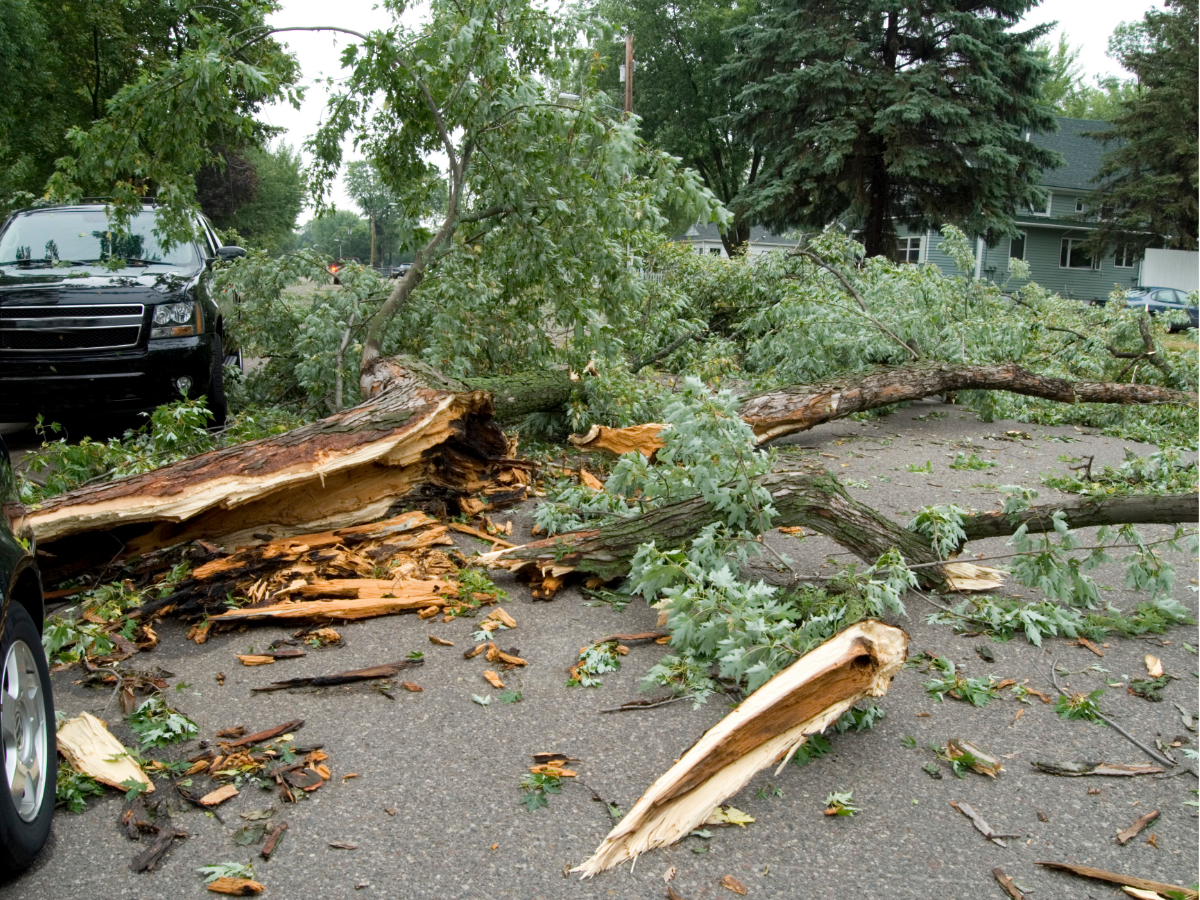
Second, the history of storm activity on Long Island makes increased inspection frequency particularly sensible for commercial properties in this region. Nor'easters, tropical storms, and even severe summer thunderstorms can inflict stress on trees that is not immediately visible. After any significant weather event, a post-storm walkthrough by a qualified tree care professional is strongly recommended in addition to your scheduled annual or semi-annual inspection. Storm-related inspections are not a replacement for routine structural assessments - they complement them by identifying acute damage before it has time to worsen.
Third, if your commercial property has recently undergone construction, excavation, paving, or utility work near tree root zones, you should schedule an inspection promptly regardless of when the last one occurred. Construction activity near trees is one of the leading causes of delayed structural failure. Roots are often damaged invisibly during excavation, and the resulting instability may not manifest visibly for one to three years after the work was completed. Any time ground disturbance occurs within the drip line of a commercial tree, that tree should be re-evaluated.
- Properties with high foot or vehicle traffic near trees should inspect at minimum twice per year
- Trees showing any visible signs of stress, disease, or prior damage warrant immediate inspection outside the regular schedule
- Post-storm inspections should follow any significant weather event as a supplement to routine scheduling
- Recent construction or utility work near root zones requires a prompt, unscheduled assessment
- Older or larger trees with complex branch architecture benefit from more frequent professional evaluation
What a Structural Tree Inspection Actually Involves
It is worth taking a moment to clarify what distinguishes a structural tree inspection from a general aesthetic review of your landscaping. When a tree care professional conducts a structural inspection, the goal is specifically to evaluate the mechanical integrity of the tree - its ability to remain standing and intact under the stresses of wind, weather, and its own weight. This is a different lens than simply determining whether a tree needs trimming or looks attractive.
A thorough structural inspection begins at the root zone and works upward. At the base, the inspector looks for signs of root rot, basal decay, soil heaving, fungi such as mushrooms or conks growing at or near the base, and any changes in the tree's lean since the last inspection. The trunk is then assessed for cracks, cavities, included bark, co-dominant stems, and any areas where the wood appears discolored, soft, or compromised. Moving into the canopy, the inspector evaluates the branch architecture for weak attachment angles, dead limbs, crossing or rubbing branches, and overall balance. They also consider the tree's proximity to structures, power lines, and high-traffic areas, since risk is always a function of both the likelihood of failure and the consequences if failure occurs.
Some inspections may involve more advanced assessment techniques when surface observations suggest deeper structural concerns, though the specific tools and methods used will depend on the professional conducting the inspection and the nature of the issues identified. What matters most for commercial property owners is that the inspection is conducted by a qualified professional with documented experience in tree risk assessment, and that a written report is generated for your records.
Joe Tree Tree Service offers commercial tree service and tree inspection services to property owners and managers throughout the Long Island area. Their team works with commercial clients to evaluate tree health and structural condition as part of a broader approach to property care. You can learn more about their commercial tree service offerings and reach out to discuss what an inspection schedule might look like for your specific property.
Seasonal Timing and Why Fall Is a Smart Window for Commercial Inspections
While structural tree inspections can and should be conducted at various points throughout the year depending on circumstances, fall stands out as one of the most strategically valuable windows for a comprehensive annual or semi-annual inspection on commercial properties in the Northeast.
As leaves drop through October and November, the structural framework of a tree becomes fully visible in a way it simply is not during the summer months. Deadwood that was hidden within a dense green canopy is now obvious. Weak branch attachments, cavities, and crown imbalances that might have gone unnoticed in July are clearly visible in November. For property managers who can only commit to one thorough inspection per year, fall gives you the clearest possible picture of what you are working with before winter weather arrives.
Winter on Long Island brings its own set of stressors for commercial trees. Ice accumulation, heavy snow loads, and powerful wind events can all push structurally compromised trees past their breaking point. Identifying and addressing those weak points in the fall - whether through pruning, cabling, or in some cases removal - is far preferable to discovering the problem after a winter storm has brought a large limb down on your property. Getting ahead of those risks now is both safer and more cost-effective than emergency response work after the fact.
Spring inspections serve a complementary purpose. After winter dormancy breaks, an inspection in late March or April allows professionals to assess any damage caused by winter weather and to evaluate how the tree is leafing out, which can reveal signs of stress or disease that developed or worsened over the cold months. For commercial properties with significant tree populations or high-risk trees, pairing a fall inspection with a spring inspection gives you year-round coverage and the strongest possible foundation for proactive tree management.
- Fall inspections benefit from improved visibility as leaves drop, making structural issues easier to identify
- Addressing weak points before winter reduces the risk of storm-related failures during ice and snow events
- Spring inspections catch winter damage and assess how trees are recovering as the growing season begins
- A combined fall and spring inspection schedule is considered best practice for many commercial properties
- Post-summer inspections are valuable for identifying drought stress or storm damage accumulated through the warmer months
The Liability and Compliance Dimension of Inspection Frequency
Beyond the practical safety benefits, there is a compelling legal and financial argument for maintaining a regular structural tree inspection schedule on commercial properties. Property owners have a legal duty of care to anyone who accesses their property. If a tree failure injures a visitor, tenant, or employee, and it can be shown that the property owner had not conducted reasonable inspections or had ignored documented warning signs, the resulting liability exposure can be substantial.
Maintaining a written record of regular inspections - including the date of each inspection, the professional who conducted it, the findings documented, and any corrective actions taken - creates a documented trail of due diligence. This paper trail does not eliminate all liability risk, but it demonstrates that the property owner took their responsibility seriously and acted on professional guidance. In contrast, a property owner who cannot produce any inspection records following a tree-related incident is in a significantly weaker position from a legal standpoint.
Some commercial property insurance policies may also have language relevant to tree maintenance and inspections. It is worth reviewing your policy and speaking with your insurance provider to understand whether documented tree care practices have any bearing on your coverage or premiums. In some cases, maintaining a proactive inspection and maintenance program can be viewed favorably when claims are assessed.
Beyond formal legal liability, there is simply the operational reality that tree failures on commercial properties are expensive. Emergency tree removal, property repairs, potential medical costs, and business interruption all carry price tags that far exceed the cost of routine inspections and preventive maintenance. Building inspection frequency into your commercial property management calendar is one of the more straightforward ways to protect your bottom line over the long term.
If you manage a commercial property in the Lindenhurst area or anywhere on Long Island and you are not currently working with a tree care professional on a structured inspection schedule, now is an ideal time to start. With fall underway and winter approaching, the window for getting ahead of potential structural issues is open right now. Reach out to Joe Tree Tree Service at (631) 956-3740 or visit their website to request a free quote and discuss a custom care plan that fits your property's specific needs. Taking this step today can make a meaningful difference in the safety, appearance, and long-term health of the trees on your commercial property - and in the peace of mind that comes with knowing your property is being managed with the care it deserves.
Search
Recent Post


LET'S CONNECT
Expert Lawn Care. Friendly Service.
Need reliable tree services on Long Island? Our experienced team is ready to help with safe, professional tree removal and more. Contact us today for a free estimate!
Call us now: